Altoro Lawn Mowing Height: How to Maintain a Healthy Lawn
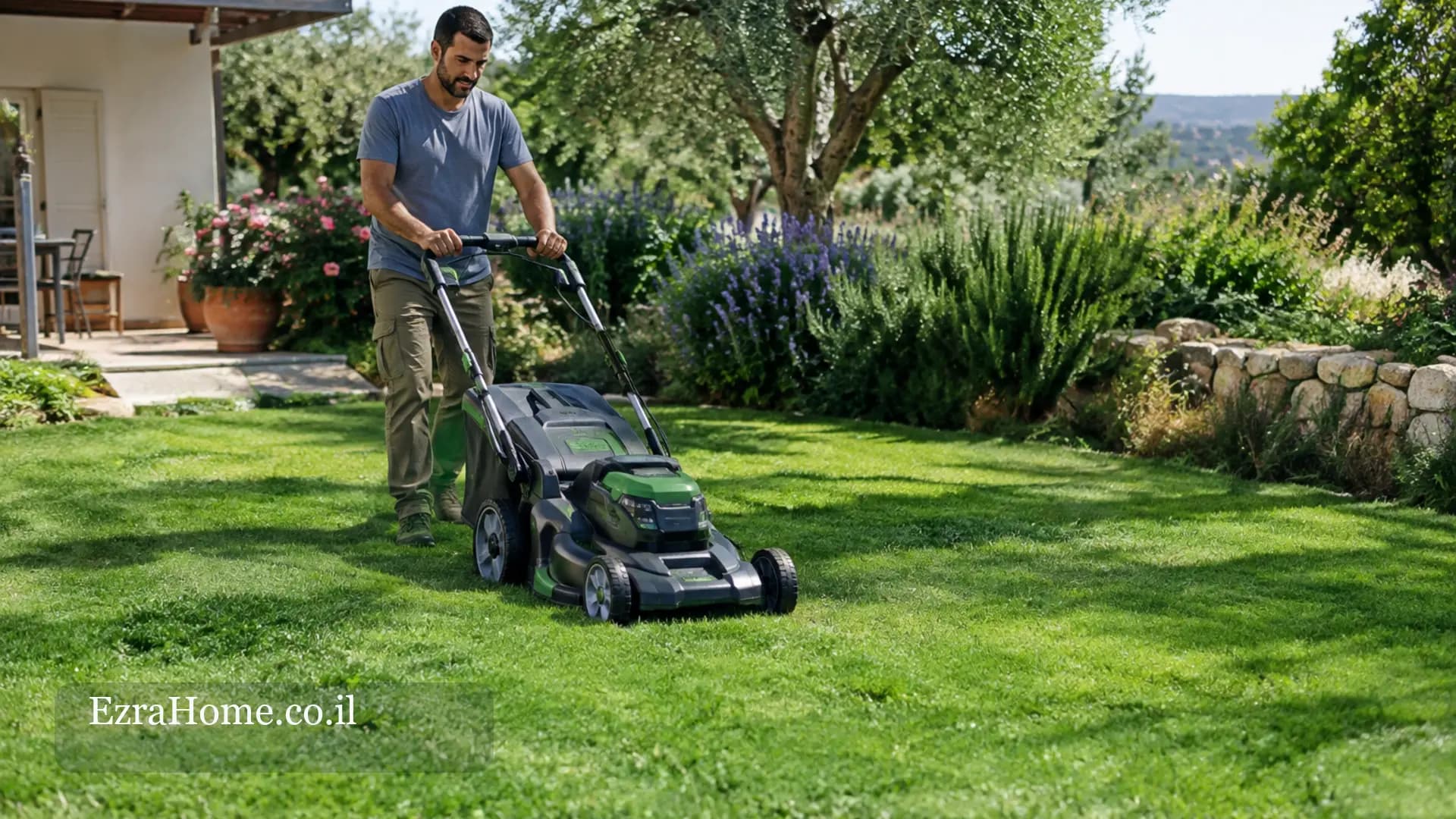
Learn how to choose a mowing height for Altoro grass based on the variety, season, and garden conditions; when to mow and how much to remove each time; what to
There is no single mowing height that suits every Altoro lawn. You should take into account the exact variety, the season, the lawn’s density, its growth rate, and the garden conditions. As a rule of thumb, do not remove more than one-third of the leaf height in a single mowing; if the grass is too tall, it is better to lower it gradually. Before setting a permanent height, check the grass supplier’s instructions or consult a gardener familiar with the lawn.
- Mowing height is the height of the leaves remaining above the ground after mowing.
- Do not assume that Altoro and Durban are the same variety or need the same mowing height.
- Gradual mowing helps avoid removing too much of the foliage at once.
- Adjust the timing to the condition of the grass and the garden, not just to a fixed schedule.
What is Altoro grass, and what should you find out about the variety?
Altoro grass is a name associated with lawns, but the name alone is not always enough to determine how to care for every garden. Before choosing a permanent mowing height, find out the exact variety, who supplied the grass, and whether care instructions were provided at the time of delivery. This information is especially important when it is unclear whether the lawn is actually the variety you thought it was, or when it was installed a long time ago and no records are available.
Mowing height refers to the length of the leaves remaining above the ground after the mower passes. It is not the height of the ground, nor the thickness of the grass layer. The same mower setting may produce different results on different lawns, depending on the lawn’s density, the surface, the condition of the leaves, and the type of mower. So even if you received a recommendation from another homeowner, it may not suit your conditions.
Before setting a care routine, it is worth finding out:
- Whether the grass supplier specified the variety and its maintenance instructions.
- The condition of the lawn: dense and even, or sparse with bare patches.
- Whether the garden conditions have changed since the grass was installed, for example, in terms of shade or irrigation.
- Whether the recommendation you received applies to your specific variety or to lawns in general.
Checking these details does not guarantee a particular result, but it helps prevent relying on a number that does not suit the grass and its actual growing conditions.
What is the right mowing height for Altoro grass?
Altoro grass mowing height is the height of the leaves remaining above the ground after the mower passes. It is selected based on the exact variety, the lawn’s condition, the season, and the garden conditions; therefore, a single numerical height should not be presented as a standard that suits every Altoro lawn.
Rather than starting with a fixed mower setting, first check the recommendation from the grass supplier or a professional familiar with the variety and site conditions. If you do not have reliable instructions, avoid making a sudden change in height. You can start with a moderate mow, see how the lawn looks afterward, and adjust gradually. It is especially important not to remove more than one-third of the leaf height in a single mowing. This is a general rule of thumb, not a substitute for professional instructions tailored to the variety.
Mowing too low may expose parts of the ground and change the appearance of the lawn. Mowing too high for routine maintenance may also leave the grass uneven, especially if the mower is not suited to the surface or the leaves are very long. In either case, there is no need to try to fix everything in one pass: assess the lawn, lower the height gradually, and check its response.
When deciding how to adjust the height, pay attention to:
- How even the surface is, and any bumps or hollows that affect the mowing result.
- The density of the leaves and whether there are sparse or bare areas.
- The supplier’s instructions, if the variety can be identified with certainty.
- Any change in the lawn’s appearance after the previous mowing.
If you are unsure of the variety or the grass is responding unusually, avoid aggressive experimentation and seek professional guidance.
How might mowing Durban grass differ?
Do not assume that Altoro grass and Durban grass are interchangeable names or identical varieties. When comparing mowing Altoro grass with mowing Durban grass, the first step is to find out which grass was actually installed. Trade names, identification based on appearance alone, or information you received verbally may not be enough to determine the care requirements. If the type of grass is unclear, contact the supplier you bought it from or a gardener who can assess the lawn.
Even when two lawns look similar, their growing conditions may differ: sunlight, shade, soil, irrigation, garden use, and density all affect the appearance of the lawn and its growth rate. Therefore, a recommendation given for Durban grass in one garden will not necessarily suit Altoro grass in another. It is important to distinguish general information from instructions that apply to a specific variety and local conditions.
Before adopting a mowing recommendation given for another lawn, consider the following questions:
- Has the variety’s name been verified with the grass supplier, rather than assumed from its appearance?
- Does the recommendation refer to the height of the leaves after mowing or to a general mower setting?
- Are the garden conditions similar in terms of sun, shade, irrigation, and use?
- Is this a professional recommendation for your variety or a general rule of thumb?
If the difference between the names is unclear, do not treat them as interchangeable when making a decision. Accurate identification is a better starting point for choosing a height, mowing frequency, and suitable maintenance plan.
How do the season and garden conditions affect mowing?
Grass does not grow at a constant rate throughout the year, and even during the same season, its growth may vary from garden to garden. Direct sunlight, shade, irrigation, soil type, foot or animal traffic, and the lawn’s condition all affect how often it needs mowing and the result. Therefore, mowing grass in summer or mowing grass in winter should not be based on the season alone. It is worth looking at the leaves and their actual growth rate, and following the supplier’s instructions if available.
In some areas, the lawn may grow at a different rate than in shaded areas or in a garden that receives less water. Changes in irrigation or shade may also affect the lawn’s appearance. Do not infer the cause from yellowing or slow growth alone, and do not assume that changing the mowing height will solve the problem. Consider the overall picture, and if damage persists or has no clear explanation, consult a professional.
The following table offers a way to think about mowing based on the lawn’s condition. It does not specify a numerical height, and the decision should be adjusted to the variety’s instructions and local conditions.
| Condition or period | What to check | Mowing adjustment | If the grass is too tall |
|---|---|---|---|
| Vigorous growth | Growth rate, evenness, and leaf height | Mow according to the condition of the grass, without removing more than one-third at a time | Lower the height gradually over several passes at suitable intervals |
| Hot weather | Whether the leaves are dry and the condition of the lawn | Avoid sudden changes and, if possible, mow when the leaves are relatively dry | Do not try to reach the final height in a single pass |
| Cool period or slow growth | Whether the grass has actually grown longer and whether the soil is wet | Mow only as needed and in accordance with the variety’s instructions | Wait for suitable conditions and proceed gradually |
| Shaded area | Leaf density and evenness of growth | Assess the condition of the lawn rather than automatically copying a recommendation for a sunny area | Lower the height carefully and check the result |
| Damaged or sparse lawn | Bare patches, color, and leaf condition | Avoid aggressive mowing until the lawn’s condition has been assessed | Request a professional assessment instead of removing a large amount |
How often should you mow, and how much should you remove each time?
How often you mow Altoro grass depends on its growth rate and the garden conditions, so it is best not to rely on a fixed day of the week or the same schedule all year round. Check the lawn regularly: if the leaves have grown longer and mowing is needed to maintain an even appearance, you can plan to mow; if growth is slow and the lawn looks tidy, you may not need to mow just because a set date has arrived. The decision should also take the condition of the leaves and the site into account.
The general rule is not to remove more than one-third of the leaf height at a time. If the lawn has been neglected or the grass is tall, do not try to fix the situation by mowing it very low all at once. Lower the height gradually, checking the response between passes and following the supplier’s recommendations for the variety. Remember that this rule does not determine the desired height; it helps you avoid removing too much in a single pass.
A practical plan might look like this:
- Check the length of the leaves and the condition of the lawn before starting the mower.
- Compare the height with the instructions you received for the variety, if available.
- If the grass is tall, lower it gradually rather than cutting it drastically.
- After mowing, check whether the lawn is still even and whether any bare patches or color changes have appeared.
Mowing too often does not guarantee a healthy lawn, while mowing too infrequently may mean that you need to remove a lot of foliage in one pass. Adjust the interval between mowings to the growth rate, and do not hesitate to seek advice if you are unsure what to do after a period without mowing.
How should you mow, avoid mistakes, and know when to hire a gardener?
To maintain an even result, start by checking the mower: make sure it is in good working order, the blade setting is in accordance with the manufacturer’s instructions, and no parts are damaged. A dull blade or a poorly adjusted machine may make it harder to mow evenly, but neither alone indicates the condition of the grass. It is best to mow when the leaves are relatively dry, because mowing when they are very wet may produce a less even result, and clippings may accumulate. After mowing, check whether piles of clippings remain and decide whether to remove them based on the lawn’s condition.
Mistakes to avoid include:
- Mowing too low in an attempt to get a short look immediately, without checking whether the variety is suited to it.
- Removing a large portion of the leaves at once when the grass has grown long.
- Copying a mowing height or frequency from Durban grass, or any other lawn, without identifying the variety.
- Mowing very wet leaves or using a mower whose condition has not been checked.
If the grass looks yellow after mowing, check whether it was cut too short, whether too many leaves were removed, and whether the mower and blade are in good condition. At the same time, assess the irrigation and the lawn as a whole; yellowing alone does not prove what the cause is. A gardener may be able to help when the variety has not been identified, the lawn has been damaged, or the problem keeps recurring despite careful maintenance.
When choosing a professional, ask whether they are familiar with the variety and the garden conditions, and exactly what the maintenance work includes. For more information, see gardening services and our guide to choosing a gardener.
Frequently Asked Questions
What is the recommended mowing height for Altoro grass?
There is no single height that suits every lawn. Find out the exact variety, check the supplier’s instructions, and take the season, lawn density, growth rate, and garden conditions into account. If there is no verified recommendation for your grass, avoid sudden changes and start with gradual, careful mowing.
Do Altoro grass and Durban grass need the same mowing height?
Not necessarily. Do not assume they are the same variety or have the same care requirements. Check the grass type with the supplier or ask a gardener to identify it. Even after it has been identified, garden conditions such as sun, shade, irrigation, and the lawn’s condition affect how mowing should be adjusted.
How much of the grass height should you remove each time you mow?
As a rule of thumb, it is best not to remove more than one-third of the leaf height at a time. If the grass is tall, lower it gradually rather than trying to reach the final height in one pass. This rule does not determine the right height for the variety, so it is still important to check the supplier’s instructions.
How often should you mow Altoro grass?
The frequency depends on the growth rate and the garden conditions. Check the condition of the leaves and how even the lawn is, and decide according to need rather than relying only on a fixed schedule. Sun, shade, irrigation, and the season may change the growth rate, so it is worth monitoring the lawn itself.
Should you mow grass when it is wet?
It is best to avoid mowing when the leaves are very wet. Under these conditions, the result may be less even, and the clippings may stick together or accumulate. If possible, wait until the leaves are relatively dry, and also check that the soil and working conditions are suitable for safe mower use.
What should you do if the grass looks yellow after mowing?
Check whether it was mowed too low, whether too many leaves were removed, and whether the mower blade is in good condition. Also assess the irrigation and the lawn’s condition, but do not assume that yellowing points to a single cause. If it continues or appears in many areas, it is worth asking a professional to inspect the grass.
The information was reviewed and is current as of 2026-10-10. These recommendations are general and do not replace instructions from the supplier for the exact variety or an assessment by a professional in your garden’s conditions.
Unsure how to adapt your garden maintenance to your needs? Explore the services and solutions available on the Ezra Home website.
Be one of the first EzraHome specialists
EzraHome is launching a modern marketplace for home specialists. Create a professional profile and describe your experience, services, languages and working areas. Clients will be able to find you in the app and message you in the chat.
EzraHome is a platform: you set your services, area and schedule yourself.